To earn a nickname as a football player at the University of Alabama, you have to be pretty special.
And to earn one such as “Mount Cody,” you have to truly live up to it.
Standing at 6-foot-4 and weighing roughly 340 lbs., Terrence Cody certainly earned his title as a menacing nose tackle throughout his career.
The Fort Myers, Fl. native was a consensus All-American and All-SEC performer with the Crimson Tide over two seasons, recording 51 total tackles, 10.5 tackles for loss and a pair of blocked field goals over that span.
Cody was a key cog in setting the foundation for elite defensive play under Nick Saban, and he helped Alabama to a 26-2 combined record from 2008-2009, highlighted by a National Championship win over Texas in ’09.
And now, after a five-year stint in the NFL, Cody has opted to test the waters of coaching.
He recently joined former teammate and first-year head coach Les George to lead the defensive line at Southwest Mississippi C.C. in Summit, bringing the SEC superstar back to the state where his collegiate career began.
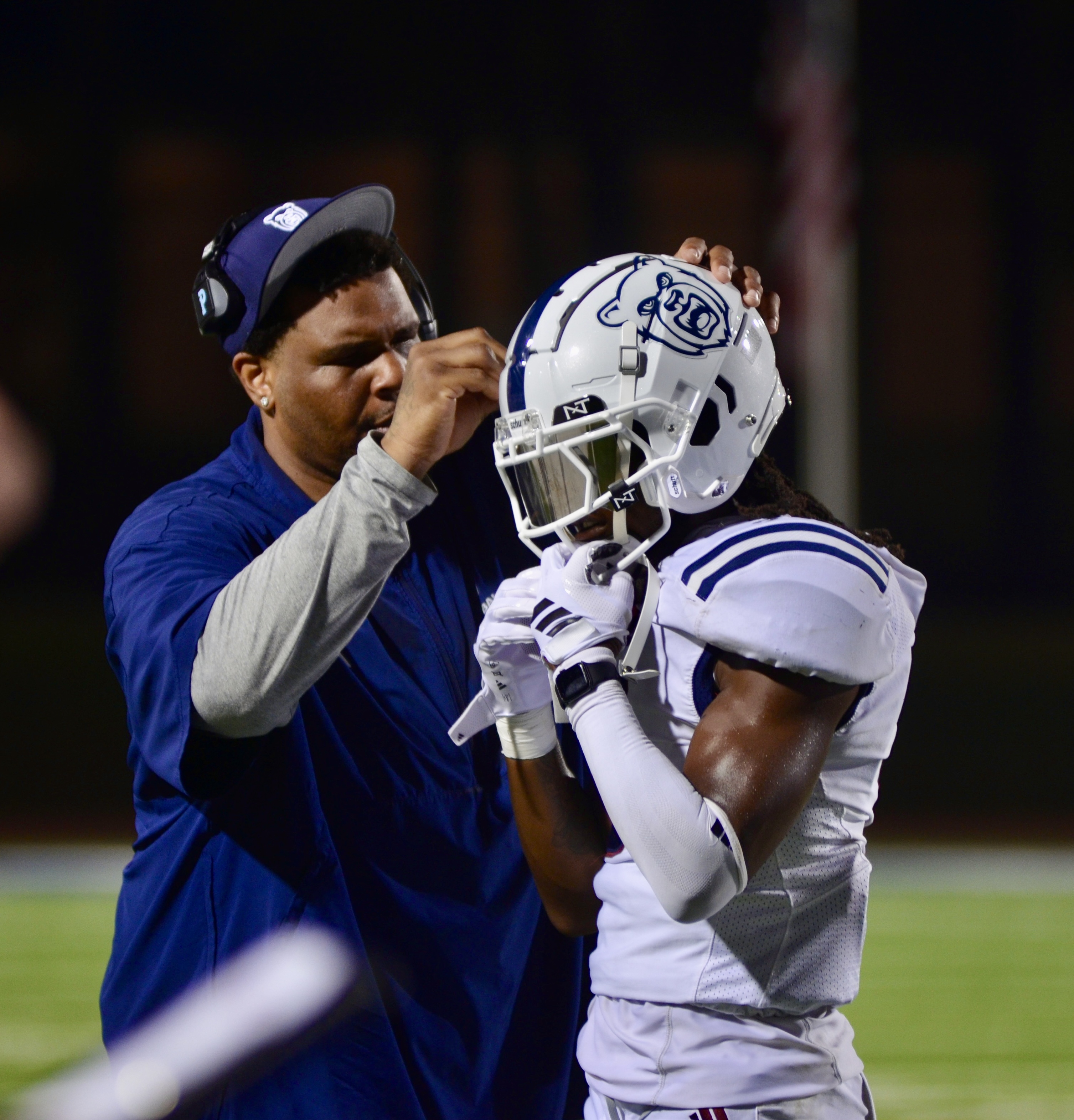 Southwest defensive line coach Terrence Cody helps a player fix his helmet.
JUCO beginnings
Cody has been an imposing human being throughout his life.
He wore size 10 shoes by the age of eight and was barred from playing in most Pop Warner Football Leagues due to his incredible frame. As a ninth-grader, Cody already stood at 6-foot-2 and weighed nearly 300 lbs.
Once he was allowed to play consistently in high school, Cody shined. Displaying surprising athleticism for his size, the bruising defensive tackle took over games with his dominance up front, notably sending future West Virginia running back Noel Devine to the sideline following a crushing hit during a high school contest.
“After the play I had seen that he [Devine] had gone over to the sideline, and then my teammates came up to me and were like ‘T, he’s been throwing up for five minutes,’” Cody said. “That was in the second quarter, and we didn’t see him again until the game went to overtime.”
But while having to help take care of his seven younger siblings alongside a single mother, Cody struggled academically. That forced him to sit out his sophomore and junior seasons of high school football, but he still earned scholarship offers from the likes of Miami and South Florida as a senior.
However, due to some of those academic issues, Cody had to sign with Mississippi Gulf Coast to begin his career at the junior college level in 2006.
He took advantage of the opportunity and continued to impress on the gridiron as a Bulldog, recording 48 tackles, 2.5 tackles for loss and an interception during his freshman campaign.
The monstrous tackle posted similar numbers on the state’s top JUCO defense as a sophomore, and Gulf Coast finished that season 12-0 as NJCAA Co-National Champions.
Cody learned a lot from his humble beginnings in Perkinston, and he believes that the experience of grinding at the JUCO level has enabled him to better coach athletes that are going through similar things at Southwest.
“I share my stories with them all the time, because at the end of the day I’m trying to help them get to where they want to be,” Cody said. “And so I tell them about how junior college can be a pit spot where you just have to take everything on the chin and roll with the punches. You have your bad days, but it’s all about how many more good days you can stack.”
Following his time as a Bulldog, Cody set his sights on playing at the D-I level.
He had earned NJCAA First-Team honors in 2007, had plenty of strong film over two seasons and could squat a mind-boggling 660 pounds.
Yet despite all of that, major college programs were initially scared off by Cody’s plus-400 pound weight.
So once he began cutting into that number, SEC programs came calling, and one in particular desired his services more than the rest.
During the early days of his tenure with Alabama, Saban needed a true nose tackle to spearhead his 3-4 defensive alignment. Thus, the future Hall of Famer took a chance on a three-star JUCO product that he believed fit exactly what the Crimson Tide needed.
“My D-line coach from Gulf Coast and I sat down with Coach Saban at first, and he started asking about my weight and was saying numbers like 350 and 360,” Cody said with a grin. “My coach and I just looked at each other and laughed. We were like, ‘Nah, I’m at around 420 right now.’”
A stunned Saban exclaimed that Cody carried the weight well…but that he’d also have to lose a lot of it.
Saban’s teachings
After cutting down from 420 to roughly 375, Cody arrived at Alabama in the infant stages of Saban’s eventual dynasty.
The Crimson Tide were fresh off a 7-6 campaign in the legendary coach’s inaugural year at the helm, and the 2008 season was one where a proud fan base expected to see marked improvement.
With Cody and a plethora of other future NFL Draft picks leading the charge, those fans were rewarded with a suffocating defense that ranked seventh nationally in points allowed and helped set the tone for the many years of future success that the program enjoyed.
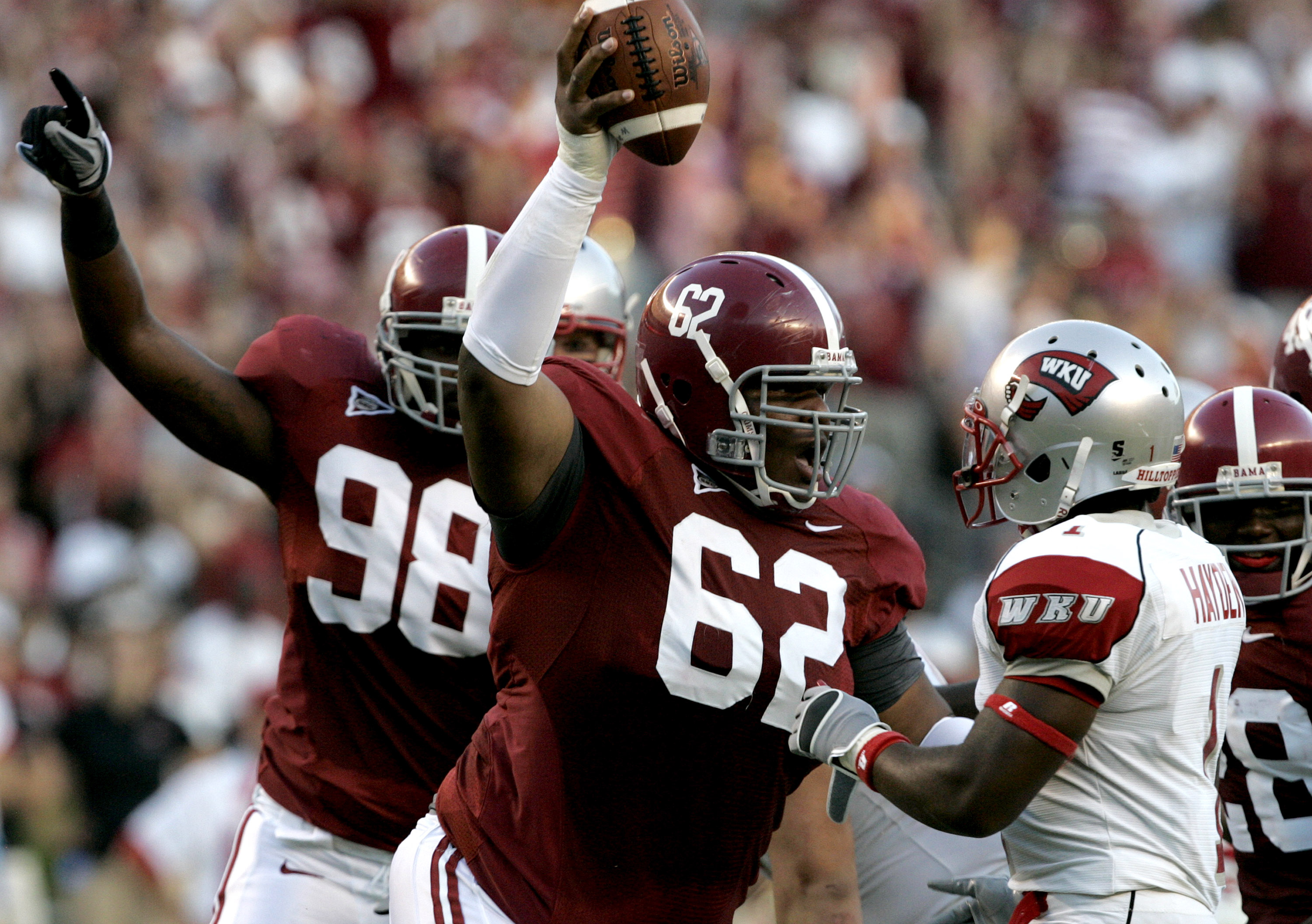 Alabama defensive lineman Terrence Cody celebrates after recovering a fumble.
Known as one of the more upbeat and enjoyable personalities in the locker room, Cody quickly earned his nickname and became a fan favorite in Tuscaloosa.
After starring in 2008 as a first-year starter, Cody dropped 10 more pounds at the request of Saban and his staff, who wanted the nose tackle to be more available on passing downs. The result was an uptick in total tackles and tackles for loss as Cody became one of the best defensive tackles in college football.
Of course, he is perhaps best known for his pair of blocked field goals against rivals Tennessee in 2009, which allowed the Crimson Tide to remain unbeaten that year:
According to Cody, those plays literally caused marital divorces within divided houses.
Roughly 15 years later, Saban’s coaching tree is already expansive. Kirby Smart, Lane Kiffin, Mark Dantonio, Jimbo Fisher, Steve Sarkisian and Dan Lanning headline a ‘who’s who’ of notable college coaches who have worked under the current ESPN analyst.
It’s gotten to the point where even some of Saban’s former players are getting into coaching. Notably, former Chicago Bears head coach Matt Eberflus was a starting linebacker under Saban at Toledo in 1990, and Cody is one of many former Alabama athletes that are now entering the coaching ranks across the high school, college and professional levels.
And much like everyone listed before him, Cody plans to use plenty of his former head coach’s teachings in his new career path.
He begrudgingly admitted that he’s caught himself using some of Saban’s mannerisms and sayings on the practice field, but the experience of playing under defensive line guru Bo Davis while in Tuscaloosa also left a sizable impact.
A Magee native and the current D-line coach for the New Orleans Saints, Davis was apparently even harsher than the widely-feared Saban.
“My coaching style is a mixture of (Davis) and Coach Saban. Both of them were strict, but there were levels to the strictness,” Cody said with a laugh. “And so at certain times, I have to say words I don’t necessarily want to say that the players may not like, while sometimes the laid-back style works. But this group responds well each time.”
Davis, Saban and plenty of other past instructors had been trying to get their former player into the industry for years, and Cody added that all of them were overjoyed when he revealed that he took his first coaching job last spring.
Coach Cody
Cody was drafted by the Baltimore Ravens with the 57th pick of the 2010 NFL Draft and was in and out of the starting lineup from 2010-2014 while helping the club win Super Bowl XLVII.
He was released by the Ravens in 2015, and after spending years in retirement as a volunteer high school coach, Cody has now opted to get back on the college gridiron, this time as a leader from the sidelines.
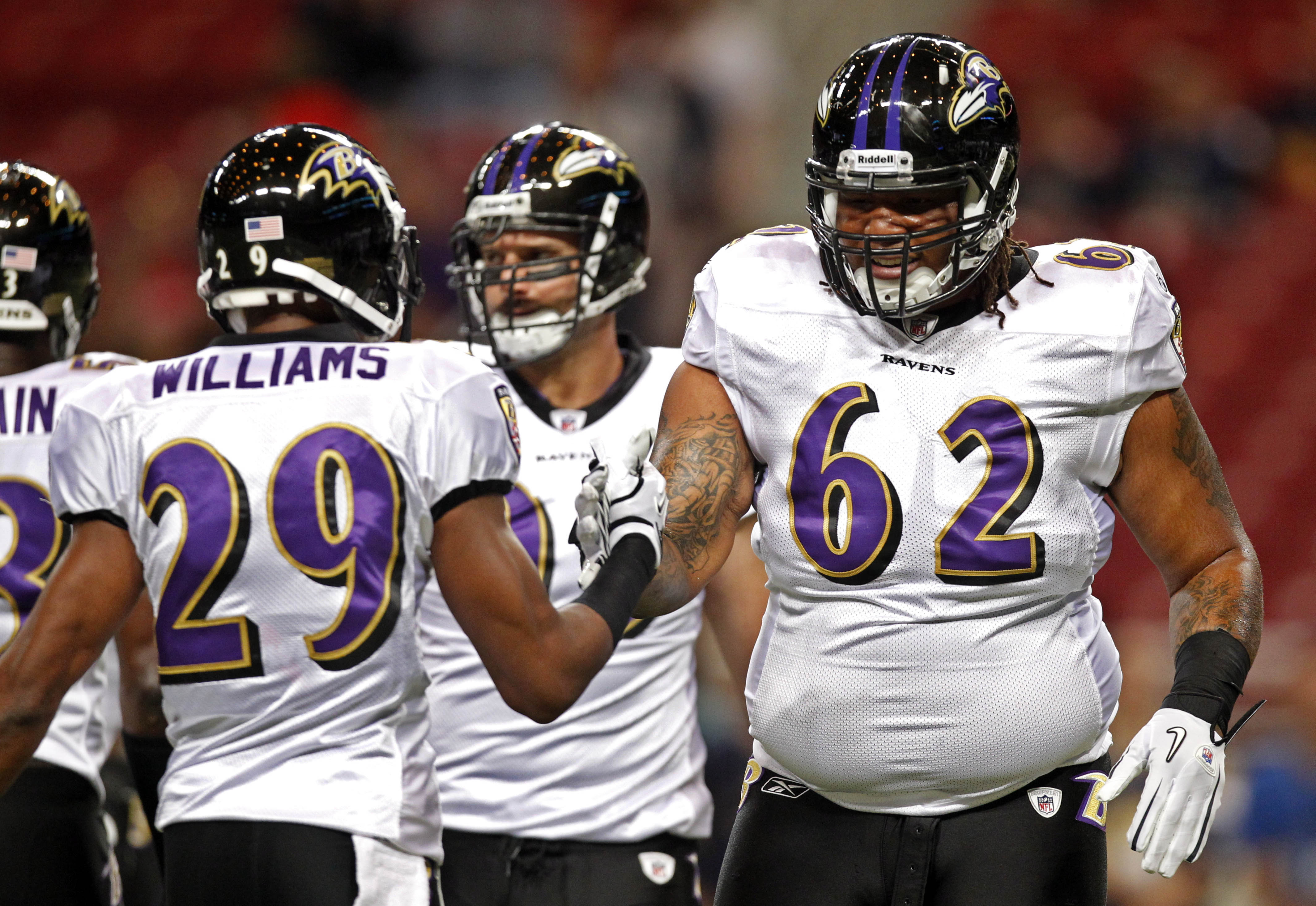 Baltimore Ravens defensive tackle Terrence Cody, right, shakes hands with cornerback Cary Williams, left, before the start of a game.
However, the decision to do so wasn’t an easy one.
Back when Cody was suiting up for Gulf Coast, George was right there with him, residing on the other side of the trenches.
So after securing the head-coaching gig at SMCC, George called his former teammate around Thanksgiving of last year, extending an offer for him to become the defensive line coach.
“It was out of the blue because I hadn’t heard from him [George] since earlier that year. And so after we caught up he told me about how he had just taken a head-coaching job at Southwest and we could build up a program,” Cody explained. “But at first, I said nah.”
Cody’s reasoning for leaning away from the position revolved around the current landscape of college athletics. With everything kids are seeing on TV regarding NIL and the transfer portal, Cody was afraid that players nowadays wouldn’t understand how things truly work in a college program and what it takes to be successful.
But in the end, his own past kept calling back to him, and it pushed Cody to eventually accept the position.
“I thought about how I had some great coaches in junior college that made me mature and develop into the person I am today,” Cody explained. “And so I just said: ‘Why not go back to where I started my legacy and go down the same path with other kids?’”
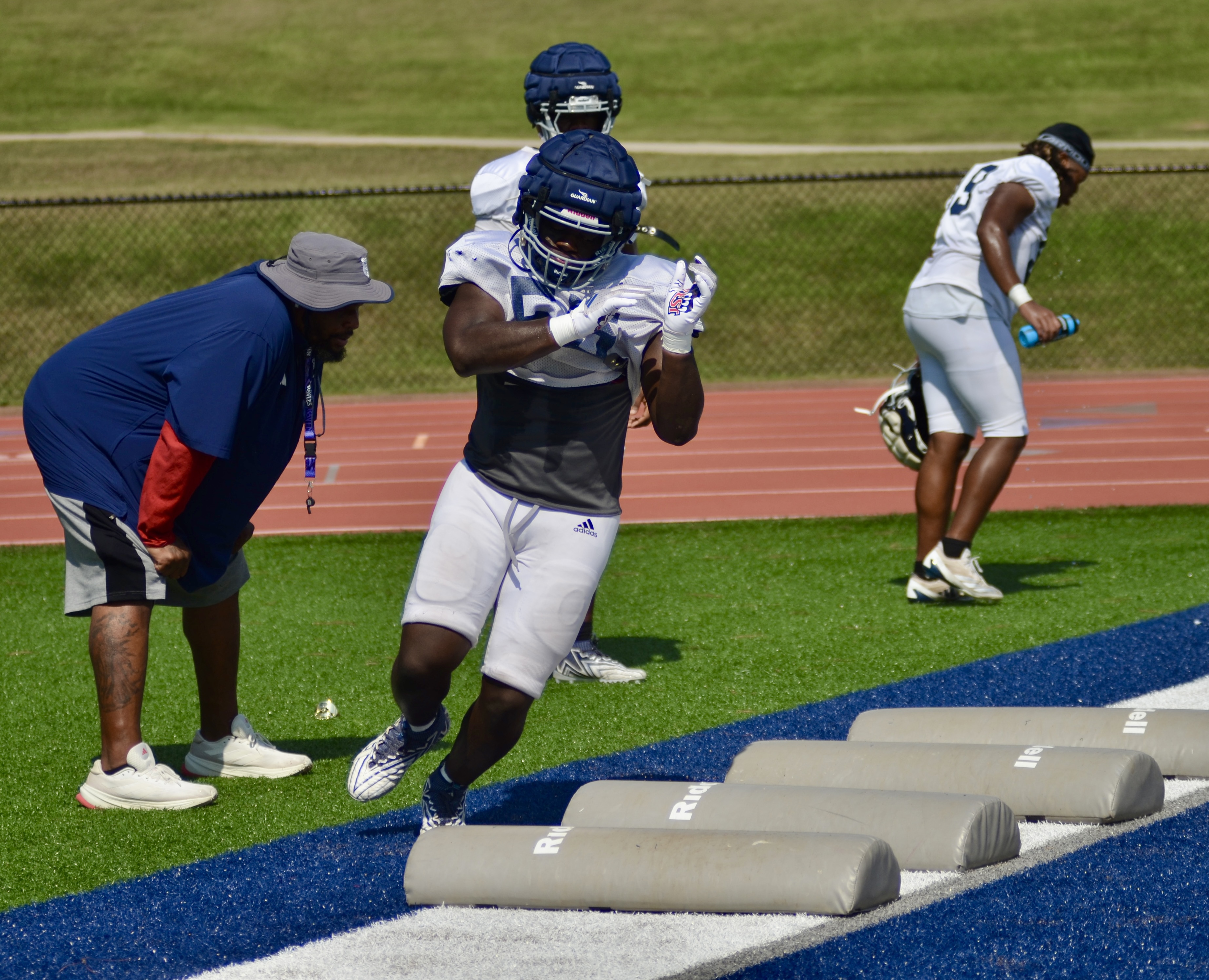 Southwest defensive linemen drill their footwork while assistant coach Terrence Cody looks on.
According to George, hiring an experienced and vibrant person like Cody to join him was a no-brainer, especially given the pair’s history with each other.
“It all really began with our relationship from when we were teammates together. That friendship stayed intact through the years and we had always talked about him getting into coaching,” George said. “And so when I got the job here, I knew that I wanted to surround myself with like-minded people in order to build a culture.”
When it comes to that culture, Cody emphasized that his units will do whatever it takes to leave opposing linemen saying things like ‘they were mean as hell’ or ‘that guy tee’d off on me every play!’
“I want my units to be some tough sons-of-guns, and we’re literally going to try to out-work you,” Cody said. “Because to play D-line you have to be a bit off [pointing at his head]. Wanting to hit somebody with full contact isn’t something a normal person wants to do.”
Having a few screws loose is just part of the gig, and when it comes to how he’s already grown as a coach, the former Alabama star says that he’s doing his best to stay on his toes throughout the highs and lows of the campaign.
“Since the season started I’ve had to reevaluate myself each week, because players and coaches can start getting complacent,” Cody said. “So I’m starting to realize that I need to keep pressing the issue of them doing what they need to do on and off the field. If I get comfortable, they get comfortable, then mistakes can happen.”
And Cody is able to be so strict because of the strong relationships he’s built with his players. That personal connection is truly unique, because not many coaches can look their kids in the eyes and tell them he’s been squarely in their shoes.
“I relate to my whole unit, especially with some of the guys that don’t have perfect family backgrounds and things like that,” Cody said. “I lost my dad at an early age and had to grow up quickly, and so my motivation everyday was to make it out and make a name for myself so I can provide my family with stuff.”
Cody specifically sees himself in players like sophomore Miquon Merriweather and freshman Ryshawn Perry, both of whom came to Mississippi as out-of-state prospects much like their position coach did back in the day.
And even if Cody has to reel them in at times, he always tells his linemen that he’ll never stop them from being young and he’ll continue to love them no matter what.
“You have to have the ability to establish a relationship with a player in JUCO because the personal growth and developmental aspects are so key,” George said. “They have to know you care about them, and I’ve already noticed with Cody that he understands it. And that stems from the lasting effect that our coaches had on us at Gulf Coast.”
But more so than anything else, Cody understands the motivation of proving people wrong at this level.
Throughout his youth, the defensive tackle was told that he would never make it to college…then that he wouldn’t finish school…and then that he’d never reach the NFL.
Well, Cody accomplished all of those things, and that same drive to silence the doubters is now felt within all of his players.
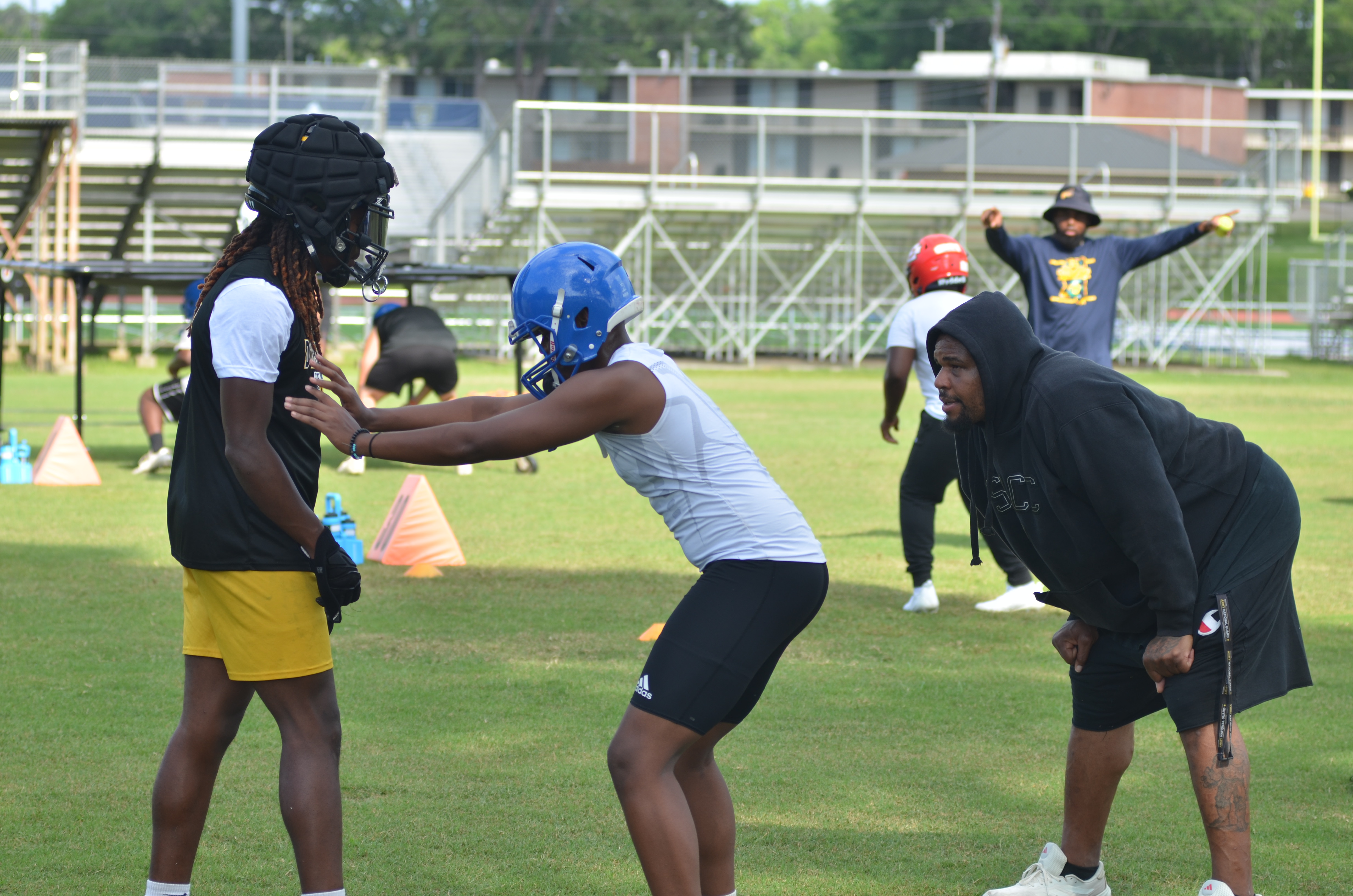 Players at SMCC's offseason high school camp drill their hand-placement while assistant coach Terrence Cody looks on.
Climbing the mountain
Having played under a variety of high-level coaches throughout his career, Cody is ready to compile all he’s learned and share it with the next crop of junior college athletes that could follow in his footsteps.
“I’ve been blessed to meet a lot of kids since I’ve gotten here, and I’ve really felt that desire to help everybody I can,” Cody said. “I always go back to myself and how I needed some older figures that I could be comfortable with when I was younger. So that’s what makes me want to stay in coaching, being someone that these guys can relate to.”
After all, going the JUCO route can be a grueling path to climb.
But if anybody knows how to do it, it’s the guy named after a mountain, one who has reached many peaks and is ready to face his next challenge at the Summit.


