The entire SEC needs to take a second for a deep breath.
Within a 24-hour period this past weekend, the entire landscape of the league was uprooted and shaken like a kid who just got their hands on a toy maraca. The conclusion of Rivalry Week meant the end of the regular season, and thus most programs immediately turned their attention to off-field matters.
And in the SEC, nobody wasted time.
Auburn, Florida and Arkansas got Sunday morning started by announcing the hirings of Alex Golesh (South Florida), Jon Sumrall (Tulane) and Ryan Silverfield (Memphis) respectively.
Then, just when the chatter around those moves began to die down, the Lane Kiffin saga hit its peak. I feel no need to detail all of the ensuing events around Kiffin’s move–as everybody and their mother appeared to be following the news–but the former Ole Miss coach eventually boarded a plane set for Baton Rouge alongside a host of staff members he convinced to join him.
Rebels’ Athletic Director Keith Carter had a countermove ready, as he quickly promoted acting defensive coordinator Pete Golding to the head-coaching role while also revealing that Kiffin would not be leading the program during Ole Miss’ upcoming College Football Playoff run.
As expected, chaos from all angles ensued.
And just when those in the sports-media realm believed they could finally put their heads to rest late Sunday night, Kentucky announced that it would be firing the SEC’s longest-tenured coach, Mark Stoops.
That final move meant that six SEC programs had hired new coaches Sunday, and a seventh had fired their head man. And to keep with the theme, the Wildcats announced the hiring of current Oregon offensive coordinator Will Stein on Monday, bringing the most hectic 48 hours the conference has ever seen to a close.
The chaos has left players and fans alike to sift through the madness, with the recruiting landscape being frazzled just like the emotions of the Ole Miss faithful.
There are roughly a million angles one could examine all of this from, and I could write for eternity about everything that went into this saga and what it means for the future of the sport.
But for the sake of readability, I’ve opted to tackle the weekend’s events from three distinct angles.
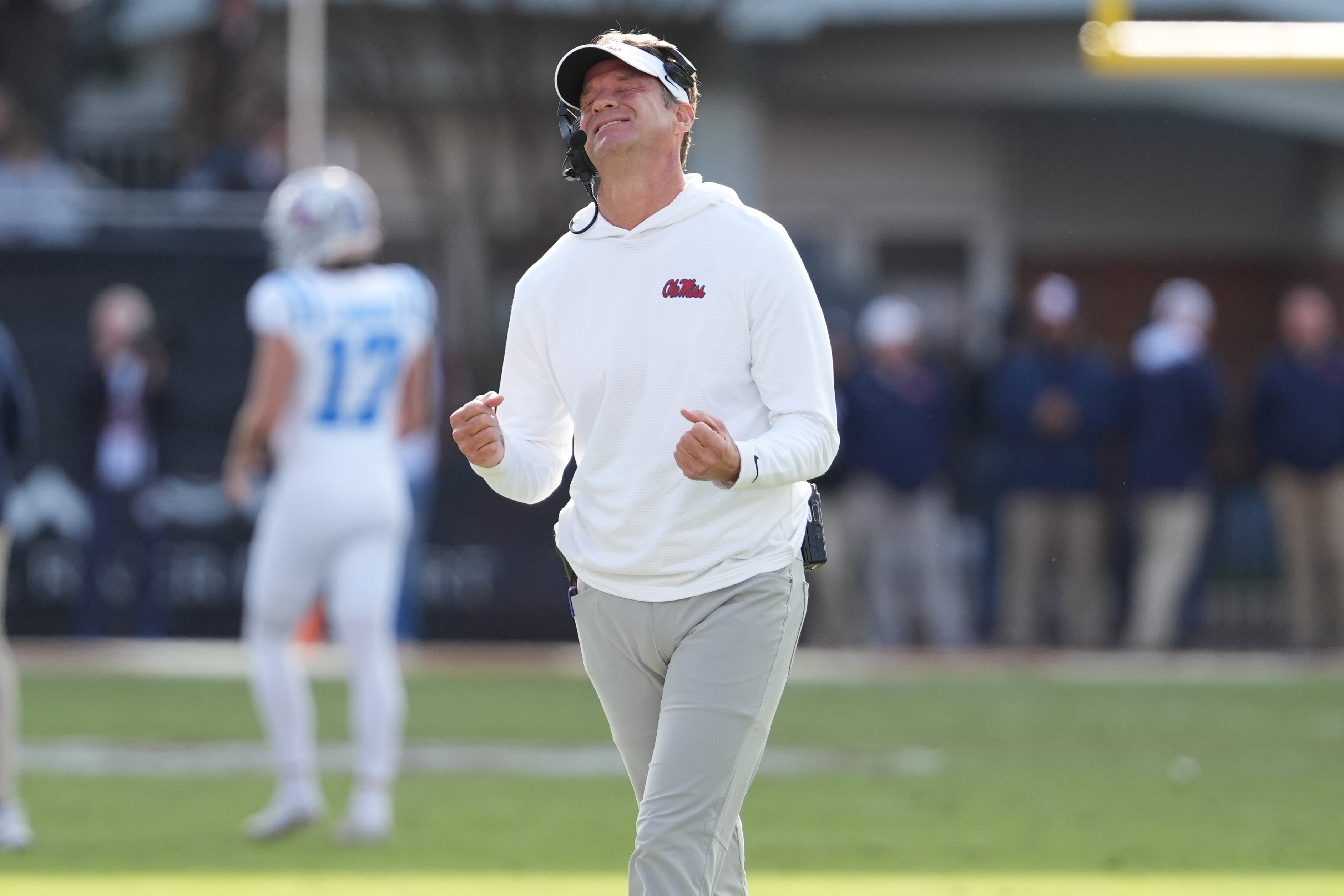 (AP Photo/Rogelio V. Solis)
The man, the myth, the Kiffin
A brief history lesson is required to fully understand just what went into Kiffin’s choice.
The son of legendary NFL defensive coordinator Monte Kiffin, Lane’s playing days saw him suit up for Fresno State as a quarterback from 1994-1996.
His coaching career began at the same place as an assistant for the Bulldogs from 1997-1998, and following brief stints with Colorado State and the Jacksonville Jaguars, Kiffin found a home in Los Angeles.
The offensive-minded coach joined the USC program during its heyday under Pete Carroll, first starting as a tight ends coach in 2001 before eventually working his way up to be an offensive coordinator in 2005.
The Trojans’ success allowed Kiffin to land the head-coaching gig with the Oakland Raiders, but he only lasted two years in the NFL and endured through a messy exit.
He was then hired to take over at Tennessee following the retirement of Phillip Fulmer, but following a 7-6 campaign in 2009, he abruptly left to be the head coach at USC.
With that bridge in Knoxville also burned to ash, Kiffin proceeded to do the same thing in LA.
Promising campaigns in 2010 and ’11 turned into disappointing seasons in ’12 and ’13. That led to Kiffin famously being fired at an airport as the Trojans were returning to campus, with the team bus even taking his bags but not the man himself.
But then, as so many other coaches have done, Kiffin turned his career around in Tuscaloosa. Under the watchful eye of Nick Saban, Kiffin helped modernize the Alabama offense in the mid-2010s and became a well-respected figure in the coaching world.
Kiffin’s success with the Crimson Tide earned him another shot at being a head coach, and he enjoyed three successful years with Florida Atlantic before eventually accepting the Ole Miss. He of course led the Rebel program to heights it had never reached before, which brings us to the present day.
I grew up a Tennessee fan in a family full of Volunteers.
So to the Ole Miss faithful: While it isn’t apples-to-apples, I’ve been there, and I understand what you’re going through.
I will delve into the other side of this coin within the next section, but the actions of Kiffin are what I’m discussing here.
First and foremost, I–like many others–fell into the trap that Kiffin is truly a changed man.
At the end of the day, while he may now have a better handle on his alcohol usage and physical health, the same hot-heated, brashly outspoken individual will always exist.
If he’s your coach, you love that.
When he’s leaving you for one of your bitter rivals while your program is gearing up for perhaps the biggest game in its history, you hate it.
Hell, it might even prompt you to figure out when Kiffin is departing, drive to the airport and scream curses at him while he’s boarding the plane.
At the end of the day, while exterior factors did not do Kiffin any favors, he dramatically mishandled this. From his petty social media foreshadowing to the awkward way he addressed the media during this time, Kiffin destroyed relationships and made an enemy of countless people who will never know him.
And frankly, it barely seems like the guy cares.
Do I believe he truly cared about Ole Miss and did everything he could to improve the football program? Yes.
But has he shown his true colors as someone who’s selfishly just attracted to what’s new and shiny? Also true.
Kiffin publicly stated that he talked to two people in the football world when making this decision.
Nick Saban was the first, and I can’t imagine that the future Hall of Famer would have advised Kiffin to handle this situation how he did.
Pete Carroll was the second, and I certainly can believe that the current Las Vegas Raiders coach led Kiffin down this path.
After all, Monte charged Carroll with looking out for his son, and the former USC coach hasn’t exactly been a beloved figure by all of the places he’s left behind either. And frankly, should Kiffin be taking advice from a guy who likely will be unemployed by the end of the NFL season?
But I must admit a fact, one that Ole Miss fans will have to learn to accept: Kiffin will win at LSU, and he’ll probably win big.
With Kiffin’s extensive background, his connections in the region and the immense resources at his disposal, I would be surprised if the Bayou Bengals aren’t national champions within five years.
And for Kiffin, clearly that’s all that matters.
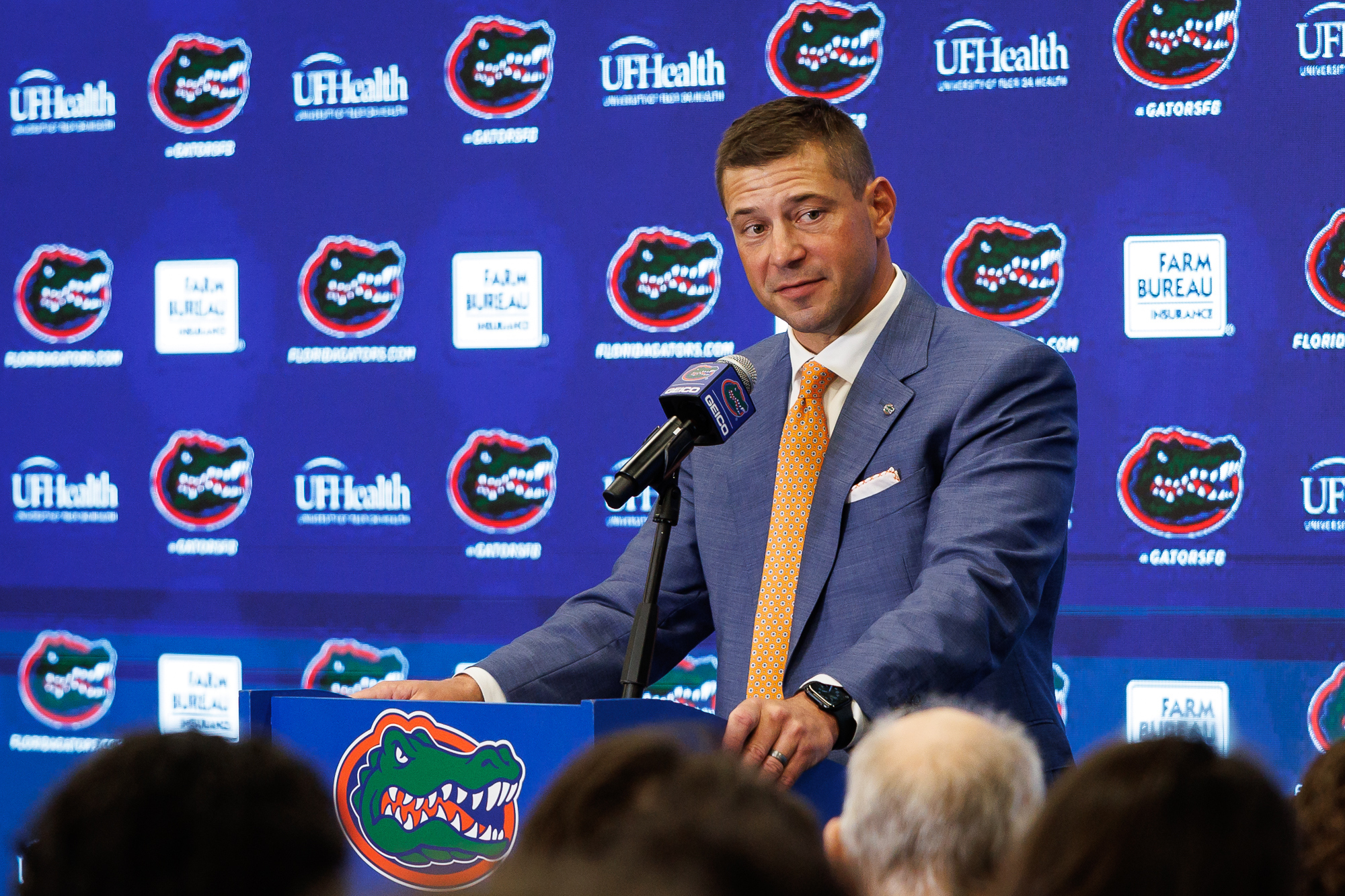 (AP Photo/Chris Watkins)
College football’s catastrophic calendar
Now that I’ve painted Kiffin as the villain, I’ll address the other side of this story.
College football is a beautiful thing, but it is also in dire straits.
There is absolutely no world in which Kiffin should have been making this decision at this time. Ole Miss didn’t want it this way, LSU didn’t want it this way, the fans and players didn’t want it this way, and now many people are left feeling a strange mix of negative emotions.
And of course, this isn’t the only instance of an untimely coaching move occurring this year.
With both having already agreed to take new jobs, Tulane’s Sumrall and North Texas’ Eric Morris (Oklahoma State) are still planning on coaching their teams in the upcoming American Conference Championship and potentially the playoffs.
Elsewhere, Stein is reportedly going to juggle his duties as play-caller at Oregon and head coach at Kentucky throughout the Ducks’ CFP run.
People will get upset with some of those individuals for abandoning their programs without having finished what they started. At the surface level, that’s validated.
But then one must think about the other perspective.
Taking Sumrall as an example, if he had waited until after Tulane’s season was over to take the Florida job, the Gators would have been horrifically behind the 8-ball when it came to recruiting and the transfer portal. After all, Early Signing Day is Wednesday, and while the portal period doesn’t officially begin until Jan. 2, it’s essentially open season when it comes to talking with players and their agents.
And that doesn’t even address the losses when it comes to NIL fundraising, because who wants to donate to or sponsor a football team that doesn’t even have a coach?
Those are just the most glaring of many reasons why college football programs can’t afford to wait and make a hire anymore. Essentially, if you hire a coach in the spring, you might as well write your ensuing season off as a lost cause.
So in the end, Kiffin was faced with an impossible choice:
Remain at the place that adores you and is already on a promising trajectory, saying no to a once-in-a-lifetime opportunity that could open the door to even greater success?
Or take over a legendary program with limitless resources and support, in turn setting fire to your carefully crafted reputation and creating thousands of enemies in the state of Mississippi?
That’s a decision no head coach should be making in the latter weeks of November. This should be the time of year when everybody is getting excited about the playoff and upcoming awards season, but instead all we are talking about are coaching changes, recruiting and what rosters will cost next year.
Coaches have been saying for years that fixing the current calendar of the sport will alleviate many of its current issues, and while positive steps have been taken, there is still so much work to be done.
The transfer portal was finally limited to a single window this year, but the January timeframe has obviously already created issues. And with the Early National Signing period in December having gradually become the more popular time for players to make commitments, the entire calendar has essentially been accelerated.
For years, I’ve simplified the state of the sport to this:
NIL, the transfer portal, conference realignment and the 12-team playoff were all net-positive alterations to college football.
The issue lies in that individually those are some of the most drastic changes the sport has ever seen, and they were all enacted within a five-year period!
Thus, we are in a period of immense adjustment and loopholes, and while it seems that college athletics may take a step forward at times, two steps back is generally the response.
And of course, this all traces back to the issue of governance.
At this point, people are wondering what the NCAA even does, because it’s allowed so many aspects of its sports to run rampant with little litigation or perceived care. Perhaps another entity can step up and enact the changes we all know are needed, or maybe the NCAA will turn a corner at some point.
The moral of the story is this: Kiffin mishandled this past month horribly, but he never should have been in this position to begin with.
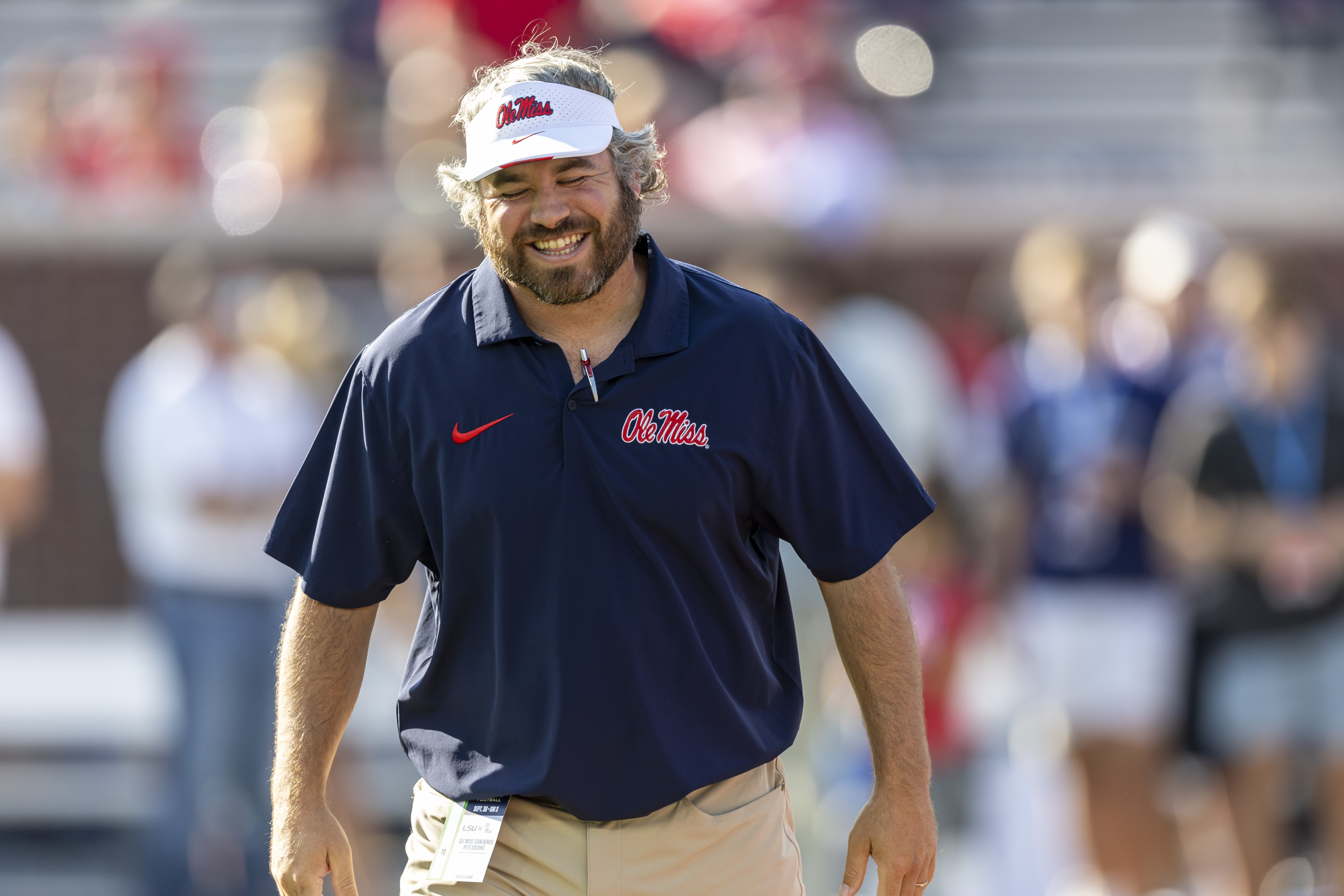 (AP Photo/Vasha Hunt)
Why Ole Miss will be just fine
So where does all of this leave Ole Miss?
From my perspective, in a pretty good spot, and the reasoning is two-pronged.
First, the drama of the past weeks should unite the Rebel faithful under the banner that their school is much more than just one coach.
The foundation is in place for this program to sustain success in the SEC, and while Kiffin played a large factor in that, he didn’t do everything. Ole Miss has recently enjoyed greater recruiting success than it has in decades, the environments at Vaught Hemingway Stadium have been top-notch and the investment in the program from fans and boosters alike has never been stronger.
Kiffin leaving will do nothing to harm any of that. If anything, the people of Oxford will only become stronger through this, and in turn, so will the Rebels’ program.
The second reason is simple: This has been a long time coming for Golding.
While some have already poked fun at Golding’s appearance or his lack of head-coaching experience, I’m among a group that believes the Hammond native is ready for this challenge.
A Delta State grad who made his bones as a standout assistant for Saban from 2018-2022, Golding drastically improved the Ole Miss defense when he arrived in 2023. The Rebels have given up an average of 19 points per game over the past three seasons after allowing 29.5 during the previous three.
And if the years of on-field interactions weren’t enough to convince fans that Golding is beloved by his guys, the players’ chants of “It’s the Golding era!” when exiting the team meeting Sunday should bring that point home.
Yes, Golding is young, and yes, he lacks any experience as a head coach. But none of that has stopped individuals from being successful at this level (just ask Oregon’s Dan Lanning), and with the foundation in place and the staff returning around him, Golding is set up for plenty of success in the future.
Of course, the years to follow will be filled with SEC fans meticulously comparing the trajectories of LSU and Ole Miss, and their annual meeting will be filled with more spice than a cajun jambalaya. And because the football gods have good humor, Kiffin and the Bayou Bengals will of course be making a trip to Oxford next year.
But for now, one of the wealthiest coaches in America will have to be satisfied with recruiting, fundraising…and watching his former team make a run in the CFP.
At their best, I truly believe Trinidad Chambliss & Co. can win a title, and to see them lift the school’s first national championship in over 60 years would be oh so poetic, wouldn’t it?


