Local healthcare professionals are looking toward an uncertain future amid impending funding cuts.
Following federal cuts to Medicaid of $1.1 trillion, smaller hospitals know they will face increased challenges in the coming years. Southwest Mississippi Regional Medical Center is no exception.
While Congress has allocated $50 billion to rural healthcare in replacement, this is less than 5% of what’s being cut. Of this $50 billion, Mississippi will receive nearly $206 million, but it remains to be seen how that will be allocated in the state.
Dr. Patrick Daigle, a McComb obstetrician and gynecologist, says he has not yet seen these changes affect individual patients. But he worries about what will happen now that Affordable Care Act subsidies expired as of Dec. 31.
“For patients, if they were heavily reliant on these subsidies to have access to health care, what are those patients going to be able to do?” Daigle asked. “I would anticipate that if the loss of the subsidies leads to patients not having access to insurance, that would obviously be a barrier to care for those patients.”
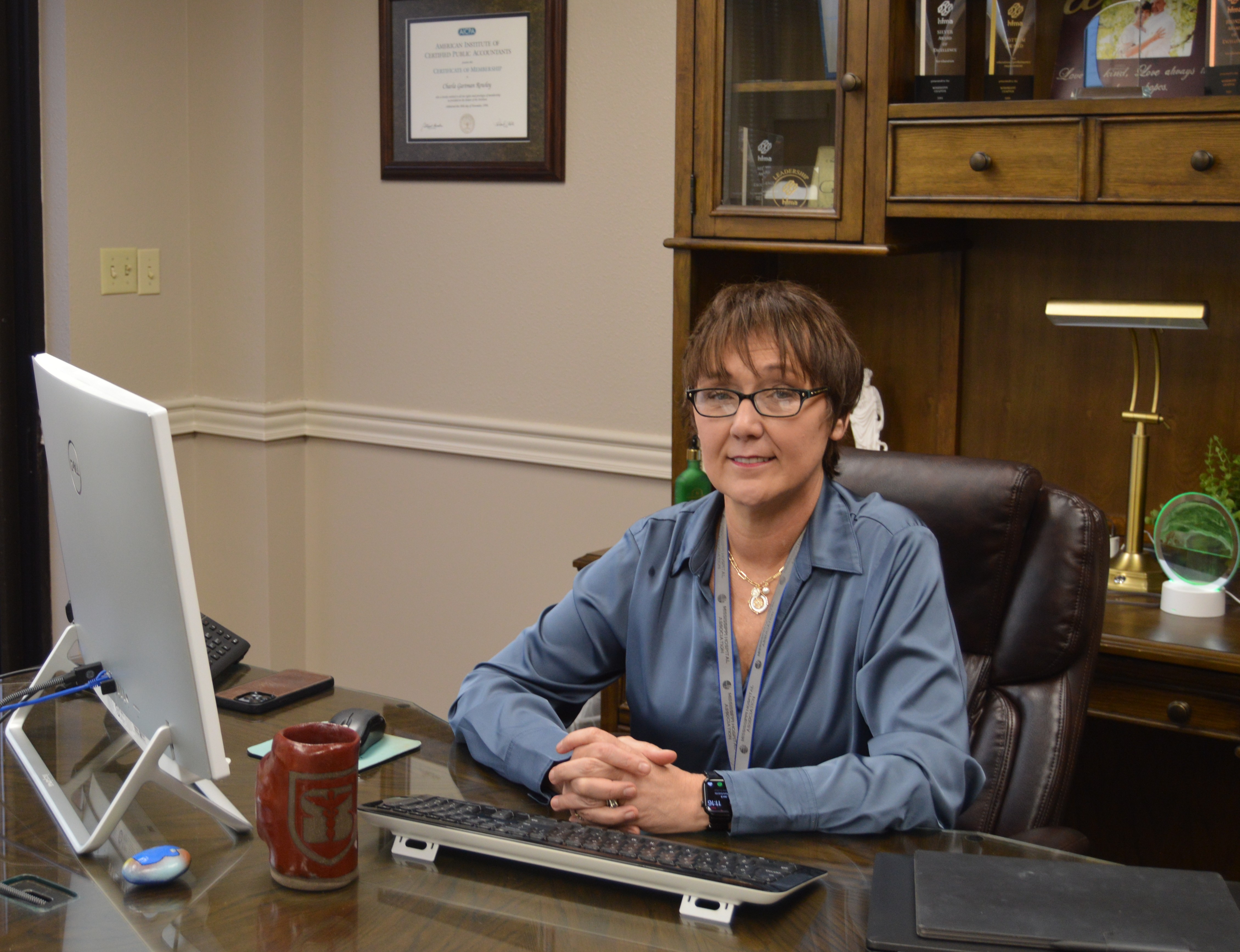 (Copyright 2026, Emmerich Newspapers, Inc. Photo by Hope King) Southwest Mississippi Regional Medical Center CEO Charla Rowley said the lost Medicaid funding was a lifeline to financially imperiled rural hospitals.
Charla Rowley has been CEO of Southwest Health since 2021. She is up front about her concerns over what is to come following cuts. According to Rowley, in recent years several rural Mississippi hospitals faced closing and were saved by Gov. Tate Reeves’s work to secure additional Medicaid funding.
“A lot of hospitals stayed open because of that funding,” she said. “Now … unless something changes, all that will go away. So, what you’re talking about is undoing something that was the salvation for many, many rural hospitals. So that’s going to put rural hospitals back at risk of not being able to stay open and provide the services to those rural communities.
Rowley is afraid the loss of funds will change the breadth of services that Southwest is able to provide.
“As funding gets cut, then you have to pick and choose what are you able to provide to this community versus what are they going to have to drive two hours to be able to get,” she said.
Daigle said he expects it will especially be difficult for patients that are seeking elective surgeries. In the world of gynecological medicine, surgeries such as hysterectomies, tubal ligations, and endometrial ablations, which can be done to treat excessive menstrual bleeding and chronic pain, are often deemed elective.
Dr. Dawn Sumrall of McComb, also an OB-GYN, is confident that any funding changes will not affect prenatal health care.
“Seventy percent of child bearing-age women in McComb are on Medicaid,” she said. “So, if (Medicaid) decreases, it would definitely limit their healthcare. It will not limit prenatal care at all, that will still be there. But our patients that work really hard and need Medicaid to help make ends meet for their other needs, I think it could be a barrier but, you know, we’re just going to have to wait and see.”
Before changes to Medicaid take place, Daigle sees transportation as perhaps the greatest barrier to local medical care. Currently Medicaid can provide transportation for medical care.
MATERNAL MORTALITY
While numbers can fluctuate by study, Mississippi is usually listed in the top three states for the highest rate of maternal deaths in the nation.
Daigle believes this is due to the already existing poor health of the population.
“In this area you are going to find patients that are more likely to be starting pregnancy obese, having chronic medical conditions like chronic hypertension or diabetes or developing gestational diabetes or developing gestational hypertension,” he said. “So, I think the biggest issue is that we have, and this effects all aspects of healthcare in Mississippi, we just have some of the sickest patients in the country. So that is going to make your risk, just beginning each pregnancy, that much higher.”
Talking about what should be done about this, Daigle said, “Sadly, it’s a target-rich environment for where you could start moving things.”
To treat hypertension, Daigle cited new technology that patients could keep in their home. For diabetes, there are now wearable devices, as well as newer drugs, but all these possible solutions have high costs that are often not covered by insurance.
“It’s scary when you talk about potential budget cuts,” Daigle said. “If I were a lawmaker, I would prioritize preserving all of the funding that we can for delivering those maternity services, because it wouldn’t take much to conjecture that if this is what we’re doing at the current funding level, slashing funding is only going to lead to worsening outcomes in a state that can ill afford it.”
Another aspect that plays a role in the maternal mortality rate is the number of teen mothers.
“It’s a significant problem,” Rowley said. She is in the very early stages of creating a program that would go into local high schools and educate girls on their health; including steps they should take if they become pregnant.
“Those teens need to be informed,” she said. “Not to feel ashamed or feel embarrassed about being pregnant, but on how they need to get the care, and what we can do to provide that care for them.”
Sumrall believes programs should be created in schools and churches to discourage young girls from pregnancy.
“Those patients aren’t denied access to care. It is automatic, they are automatically on Medicaid; all they have to do is apply for it,” she said. “The problem is that they might not seek care. They might get late prenatal care.
“Education is the key. If we could get these kids to be focused on graduating from high school, going to college, being educated, then we could fix teen pregnancy, we could fix the prenatal mortality rate.
“Almost all of these teenagers are also eligible for birth control and even long-acting birth control like IUDs, like the Nexplanon. They’re eligible for all those things,” Sumrall said, adding that parents must play a role in getting birth control to their young children.
“If you suspect that they’re sexually active at all, or even if they’ve got a steady boyfriend for three or four months, it’s time to come on in,” she said.
DIRECT ADVICE
While the conversation around what lawmakers should do regarding the allocation of funds is mostly hypothetical, medical professionals have direct advice for lawmakers.
“If I were to address lawmakers. I would say that the statistics are all plain, there for everyone to see,” Daigle said. “These things are not going to be changed by having less resources.” He says additional funding is need to provide services and maintain medical staff.
When talking about specific programs that need to be protect, Rowley said emergency room and maternity care are especially important.
“When a woman’s in labor, it’s hard to get two hours away to be able to deliver a baby,” she said. “I would love to say that as a community hospital, we can provide all services to our community so that they get their care here at home, but that’s just not financially feasible, even with the current funding.”
Rowley implored the public to “please use your voice. Express the concerns over not being able to get care in your local area. With the cuts that they’re talking about, there’s going to be rural hospitals that are not going to be able to make it.
“And to lawmakers, I would say, consider that, when you’re making these decisions, consider the communities that you’re affecting when you’re making those decisions to cut funding.”
While she does fear that some rural hospitals in Mississippi will close, Rowley does not believe Southwest will be among them.
“We’ve done a great job of building a strong foundation here,” she said. “I do think if the cuts in funding are as significant as anticipated that we will have to make choices on what we’re able to offer, because with less money you can only do so much.”
This coverage is supported by a grant from Press Forward Mississippi, part of a nationwide philanthropic effort to strengthen local news so communities stay informed, connected and engaged.


